The sermon went well. It's funny, I got most of my positive comments based on something I just made up on the spot. It was good to get feedback on very specific items in the sermon, not just "good job."
It felt a little strange being up there behind that podium. I was expressing thoughts that I'd dealt with for a long time and wasn't sure if I was coming across.
Afterward, Rita, my priest, said that she wanted me to preach again at the service before our annual meeting on January 20. So I'll try it again. the good thing is that it's a combined service, so I won't have to do two sermons.
Here are the readings, I invite your comments, meditations, and stream of conscious ramblings.
Sunday, December 30, 2007

Friday, December 28, 2007
First Thoughts for sermon
Here are the readings again. I'll take them one at a time and just free associate for now.
Isaiah: It was no messenger or angel but his presence that saved them. Something here, God works directly with us, no intermediaries. The Bible does show that God uses angels and messangers quite often, but here Isaiah assures us that the presence of God saves. This reminds me a little of how sometimes I need to just insert my presence into a situation at school to restore order or whatever, no words or admonitions, just my presence. In my experiences with contemplative prayer it is the presence that is felt, no visions or voices put a palpaple presence. This presence is very comforting, especially for sceptical people, because it can't be explained, it just is. There have been times in my own life that, when tensions are running high, the silent presence of a loved one (even the one you are fighting) is just...right.
Psalm: ecstatic poetry. At times I find this kind of praise poetry rather annoying.I usually get annoyed when I feel like my ever so difficult life is getting to me. But there are times when I am feeling like a one man praise band. This need, for me, to be a real knowing about God, not an intellectual one but a visceral felt knowing.
Epistle:it is clear that he did not come to help angels, great line. I'm no angel. This reminds me of something that Father Thomas Keating said: I find it hard to believe that Jesus rose from the dead just so I could go to heaven.
Gospel:Joseph as the main character. Being sent to Egypt. To Egypt!? The land of slavery for the Hebrew. God is sending Joseph to an unlikely place. God does this constantly, we think we might know the best for ourselves but God changes all that. We have a view from a very miopic place, it's hard to see all the variables. How can I preach on this text? It's like a car chase. I think I can identify with Joseph here. He was likely in his early 20s, new father, some astrologers had just visited, all normal. An angel comes to Joseph
Isaiah: It was no messenger or angel but his presence that saved them. Something here, God works directly with us, no intermediaries. The Bible does show that God uses angels and messangers quite often, but here Isaiah assures us that the presence of God saves. This reminds me a little of how sometimes I need to just insert my presence into a situation at school to restore order or whatever, no words or admonitions, just my presence. In my experiences with contemplative prayer it is the presence that is felt, no visions or voices put a palpaple presence. This presence is very comforting, especially for sceptical people, because it can't be explained, it just is. There have been times in my own life that, when tensions are running high, the silent presence of a loved one (even the one you are fighting) is just...right.
Psalm: ecstatic poetry. At times I find this kind of praise poetry rather annoying.I usually get annoyed when I feel like my ever so difficult life is getting to me. But there are times when I am feeling like a one man praise band. This need, for me, to be a real knowing about God, not an intellectual one but a visceral felt knowing.
Epistle:it is clear that he did not come to help angels, great line. I'm no angel. This reminds me of something that Father Thomas Keating said: I find it hard to believe that Jesus rose from the dead just so I could go to heaven.
Gospel:Joseph as the main character. Being sent to Egypt. To Egypt!? The land of slavery for the Hebrew. God is sending Joseph to an unlikely place. God does this constantly, we think we might know the best for ourselves but God changes all that. We have a view from a very miopic place, it's hard to see all the variables. How can I preach on this text? It's like a car chase. I think I can identify with Joseph here. He was likely in his early 20s, new father, some astrologers had just visited, all normal. An angel comes to Joseph
Thursday, December 20, 2007
Merry Christmas from USSR

Secular Santa Claus was allowed I guess, that and the aspirations for space.
Saint Thomas
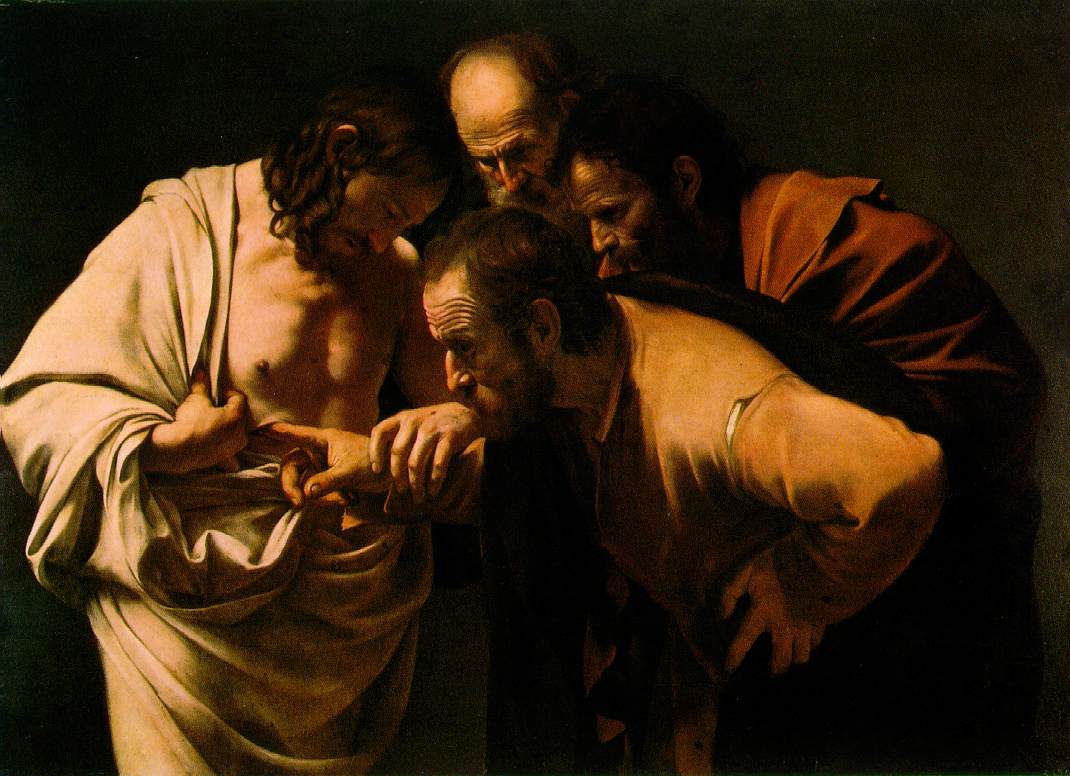

First sceptical Christian? I like Thomas because, for me, he shows the spectrum of the Christian experience. Read this great essay.
Wednesday, December 19, 2007
Sandy Claus
 Icon of Saint Nicholas
 Saint Nick's church in Turkey
 Saint Nicholas saves the innocents
Who was Saint Nicholas? Check these links to read more...
Link
Link
Link
I'm wondering why this is St. Nick's day, but it was already celebrated on Dec. 6. Anybdoy know why? Maybe this is one of those East/West breaks.
Saint Nicholas, patron saint of children, seafarers, and pawn brokers!
Tuesday, December 18, 2007
Lectio for Tuesday Advent 3 year A
First, the Lectionary. Lectionary, Lectio, etc. all come from the latin word for reading.
The Episcopal Church reads most of the Bible in three years: Year A, B, and C. The Church all reads together in unity each Sunday. We read from the Old Testament, the Psalms, the Prophets, an Epistle, and the Gospel. Every reading is optional except the Gospel, meaning the readings can be used or not, there are also alternate readign for each week. All the readings follow the Christian year and are eerily connected thematically.
The collection of readings are called the Revised Common Lectionary. The daily portion is the also part of the revised common lectionary but is called the Daily Office, which is the readings with prayers. The daily office is used by Churches for daily prayer and Eucharist celebrations. For families and individuals the daily office is for prayer, devotion, and meditation. All this can be found in the Book of Common Prayer. Perhaps this is why one doesn't find many Episcopal Devotionals, we've had one since 1549.
So wherever you go there you are when it comes to the Bible and the Episcopal Church.I find this very comforting because all the Churches are together. Also, the Bible is read in its entirety, so the people can't ignore those difficult passages such as when JC talks about making friends with dishonest wealth or that you must hate your family to follow him.
While we all read together we are far from unity on interpretation of the Scriptures. This is good.
The Episcopal Church reads most of the Bible in three years: Year A, B, and C. The Church all reads together in unity each Sunday. We read from the Old Testament, the Psalms, the Prophets, an Epistle, and the Gospel. Every reading is optional except the Gospel, meaning the readings can be used or not, there are also alternate readign for each week. All the readings follow the Christian year and are eerily connected thematically.
The collection of readings are called the Revised Common Lectionary. The daily portion is the also part of the revised common lectionary but is called the Daily Office, which is the readings with prayers. The daily office is used by Churches for daily prayer and Eucharist celebrations. For families and individuals the daily office is for prayer, devotion, and meditation. All this can be found in the Book of Common Prayer. Perhaps this is why one doesn't find many Episcopal Devotionals, we've had one since 1549.
So wherever you go there you are when it comes to the Bible and the Episcopal Church.I find this very comforting because all the Churches are together. Also, the Bible is read in its entirety, so the people can't ignore those difficult passages such as when JC talks about making friends with dishonest wealth or that you must hate your family to follow him.
While we all read together we are far from unity on interpretation of the Scriptures. This is good.

Monday, December 17, 2007
Today's Lectio
I'm focusing my thoughts and stream of consciousness on the gospel reading for today.
Yesterday's reading is a good intro to this text.
Kinda scary. Funny, I was just thinking about how revelation is so hard to read and how the Scaremongers need to pull in so many other texts to make sense of it and here we have JC himself talking about the crazy stuff that is to come "as was spoken of by the prophet Daniel."
Now, many dwell on the violence of the second coming, two in the field, one will be left, etc. I think when some people constantly describe this manner of second coming they reveal themselves and their theology as essentially violent and judgement based.
Enough of that. What I'm focusing on the unknown aspect of the second coming. Jesus warns plainly of this. The second coming will not be what we expect or can think of. Kinda like the Nativity. What do all the prophecy end times people think when they read: Take note, I have told you beforehand. So, if they say to you, “Look! He is in the wilderness”, do not go out. If they say, “Look! He is in the inner rooms”, do not believe it. God is the God surprises and the unexpected. For more on this read the Bible, especially Moses, Abraham, David, Jesus, Paul, John, and the history of Christianity.
One thing that keeps bothering me is the idea that we have our ideas and we find what we want in the scriptures. It's the same for Jack VanImpe as for me. More to come on this...
Yesterday's reading is a good intro to this text.
Kinda scary. Funny, I was just thinking about how revelation is so hard to read and how the Scaremongers need to pull in so many other texts to make sense of it and here we have JC himself talking about the crazy stuff that is to come "as was spoken of by the prophet Daniel."
Now, many dwell on the violence of the second coming, two in the field, one will be left, etc. I think when some people constantly describe this manner of second coming they reveal themselves and their theology as essentially violent and judgement based.
Enough of that. What I'm focusing on the unknown aspect of the second coming. Jesus warns plainly of this. The second coming will not be what we expect or can think of. Kinda like the Nativity. What do all the prophecy end times people think when they read: Take note, I have told you beforehand. So, if they say to you, “Look! He is in the wilderness”, do not go out. If they say, “Look! He is in the inner rooms”, do not believe it. God is the God surprises and the unexpected. For more on this read the Bible, especially Moses, Abraham, David, Jesus, Paul, John, and the history of Christianity.
One thing that keeps bothering me is the idea that we have our ideas and we find what we want in the scriptures. It's the same for Jack VanImpe as for me. More to come on this...
Sunday, December 16, 2007
Coming Schism(?) part deux
So what is the fuss? What is causing the strife in the Church? I guess the big issue was the consecration of the Bishop of New Hampshire a few years ago. I'm learning more about this. I've started here, check out the external links there. More to follow. I think it would be fair to say that the Church and its Bishops has decided to allow for full inclusion of gay and lesbian people, so they can be lay people, deacons, priests, and bishops. There are some in the Church who think this is a mistake. Still the less conservative but less progressive think the Church is moving a little to fast and leaving some behind. People feeling left by the church came to me during my lay discernment commitee time, so I've developed some compassion for these people, while my former answer would have been, "get with it old timers!"
So, I'm going to post more on this later and I want to focus on many of the other schism worthy "problems" in the church in reverse chronological order 1.) Gene Robinson and gay inclusion, 2.)the "New" prayer book 3.)Female ordination.
So, I'm going to post more on this later and I want to focus on many of the other schism worthy "problems" in the church in reverse chronological order 1.) Gene Robinson and gay inclusion, 2.)the "New" prayer book 3.)Female ordination.
Subscribe to:
Posts (Atom)